
When your heating or cooling system suddenly stops working—especially in the middle of a heatwave or cold snap—it can be hard to know whether it’s a minor fault or a full-blown emergency. At YMEC Facilities, we specialise in emergency HVAC repair for commercial buildings across Sussex, and we often hear the same questions from facility […]
When your heating or cooling system suddenly stops working—especially in the middle of a heatwave or cold snap—it can be hard to know whether it’s a minor fault or a full-blown emergency.
At YMEC Facilities, we specialise in emergency HVAC repair for commercial buildings across Sussex, and we often hear the same questions from facility managers and business owners:
“How do I know if this is urgent?”
“Is it safe to wait until morning?”
“What if I just turn it off and on again?”
In this blog, we’ll help you recognise the warning signs of an HVAC emergency, explain the potential risks of waiting too long, and show you how to get the right help—fast.
Not every HVAC issue needs an overnight call-out, but some faults really do require immediate attention. The key is understanding the difference between inconvenience and danger, or between a simple service issue and a system failure that could worsen quickly.
Here are the most common red flags that point to an HVAC emergency:
If your heating system fails during a cold spell, or your cooling system cuts out during a summer heatwave, it can quickly become a serious problem—especially in:
In these cases, lack of climate control isn’t just uncomfortable—it can be a health or operational hazard.
If your HVAC unit starts giving off a burning smell, or worse—visible smoke—shut it off immediately and call for help. This could indicate:
These are classic signs of a potentially dangerous electrical issue, and shouldn’t be ignored or left to ‘settle’.
All HVAC systems make some noise, but if you suddenly hear banging, grinding, screeching, or rattling, it could be a sign of:
These noises tend to get worse fast—and if the system continues to run, it could cause more serious (and expensive) damage.
Water pooling near your HVAC unit can be caused by:
While not all moisture issues are urgent, unexplained leaks should be checked promptly. Water damage, mould growth, and electrical risks can escalate quickly.
If your system is failing to start, or it’s tripping the power repeatedly, it could be a sign of:
Any issues involving power supply or system communication should be addressed by a qualified engineer as soon as possible.
A strong gas smell may indicate a leak from a boiler or heating system. This is always an emergency and should be dealt with immediately.
Other smells—such as chemical odours or a musty, mouldy scent—may suggest refrigerant leaks or poor ventilation, which could pose health risks over time.
Even if the system seems to be limping along, small problems often get worse quickly. Continuing to run a faulty unit can:
If you’re ever in doubt, it’s better to check early. We’d rather give your system a clean bill of health than arrive after a breakdown.
At YMEC Facilities, we offer rapid-response emergency HVAC repairs to commercial clients across Sussex and the South East. Whether it’s a full system failure or a suspicious smell that’s raised alarm bells, we’ll respond quickly to assess the fault, stabilise the system, and carry out any necessary repairs.
As a family-run business, we take pride in doing things properly—giving honest advice, clear pricing, and professional repairs that last.
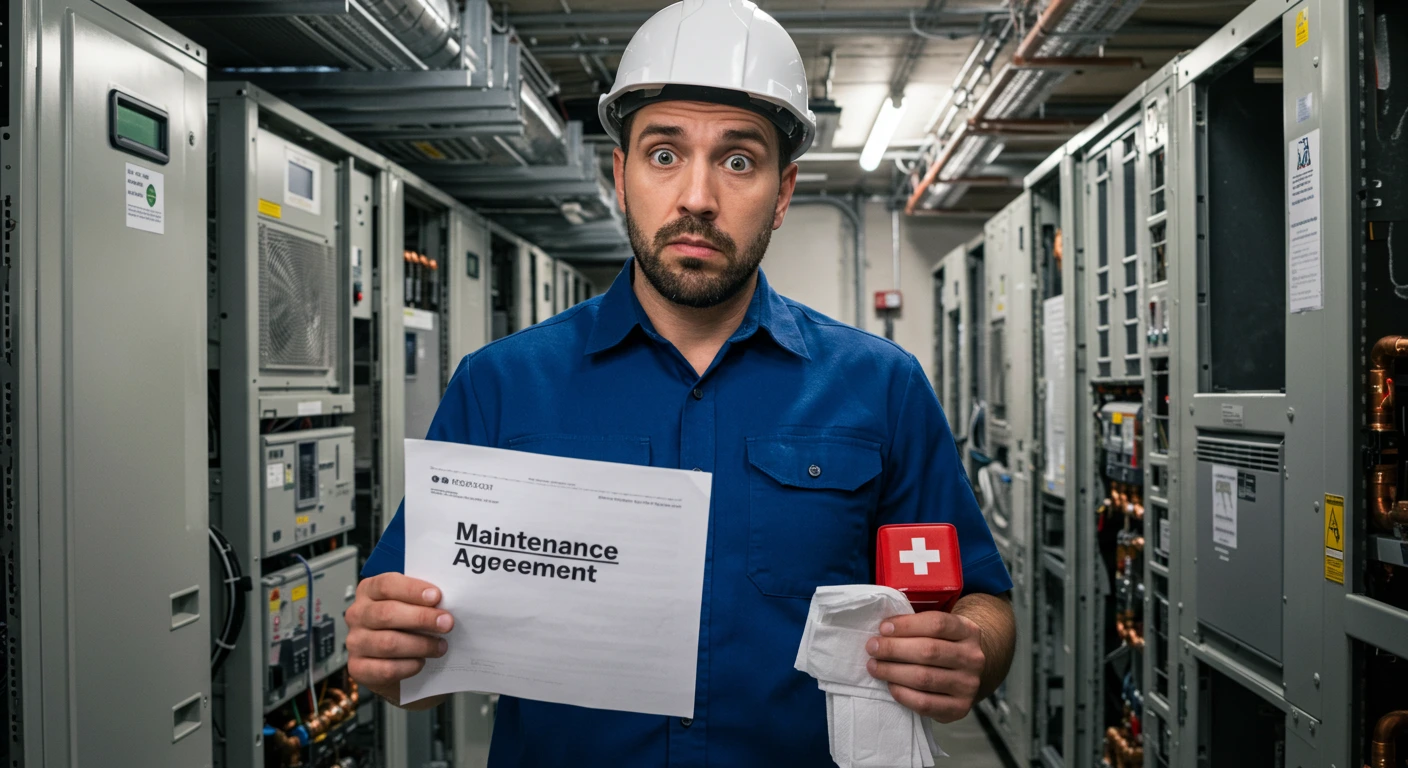
Most emergencies don’t appear out of nowhere—they often start with wear and tear that goes unnoticed. That’s why we also offer flexible HVAC maintenance plans, designed to:
If something doesn’t feel right—don’t ignore it. Contact YMEC Facilities for fast, reliable support.
We’ll help you stay safe, protect your equipment, and get your business back on track—fast.